
How to Choose a Safe Laptop Power Adapter and Prevent Damage
-
Summary
Laptop chargers have evolved from hefty proprietary bricks into compact USB-C GaN adapters capable of delivering up to 240 W. This guide explains the different quality tiers (service-pack, original-new, original-used), connector styles (USB-C PD 3.1, MagSafe 3, 4.5 mm/7.4 mm barrels), safety and certification standards (IEC 62368-1, UL), and model-specific requirements for Apple, Dell, Lenovo, HP, and universal devices. It also shows how EU “common-charger” rules and gallium-nitride technology are reshaping the market, and offers practical advice for selecting, using, and caring for your next power adapter.
Executive Overview
Reliable power is the heartbeat of every mobile workstation. A mismatched or counterfeit adapter can throttle CPU performance, shorten battery life, or—in worst-case scenarios—overheat delicate circuitry. Our Laptop Charger catalogue solves these issues with over-engineered, OEM-grade bricks that match factory tolerances for voltage ripple, thermal output, and USB Power-Delivery (PD) negotiation. We stock everything from Apple’s 140 W MagSafe 3/USB-C unit to Dell’s 130 W USB-C/4.5 mm chargers, Lenovo’s 65 W ThinkPad adapters, and compact GaN travel bricks that fast-charge multiple devices.
1 The Fast-Changing Laptop-Power Landscape
1.1 From Barrel Tips to USB-C PD 3.1
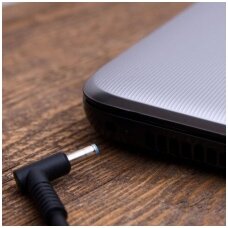
Early notebooks relied on proprietary barrel connectors—7.4 mm on legacy Dell Precision workstations or smaller 4.5 mm plugs on thin-and-light Inspirons. USB-C Power Delivery 2.0 raised the ceiling to 100 W; PD 3.1’s Extended Power Range now reaches 240 W at 48 V, opening the door for single-cable charging on powerful 17-inch laptops and gaming rigs.
1.2 Gallium-Nitride (GaN) Miniaturisation
GaN transistors switch at higher frequencies with lower losses than silicon MOSFETs, letting engineers shrink transformer cores and heat sinks. The result: lighter, cooler, travel-friendly chargers without sacrificing wattage.
1.3 Market Growth & Sustainability Drivers
Europe’s common-charger directive mandates USB-C on most portables from 2024, reducing e-waste and simplifying consumer choice. Analysts project the global laptop-adapter segment will exceed €9 billion by 2033, driven by replacement demand and higher-power USB-C sales.
2 Quality Tiers Explained
Tier Definition Best Use Case Service-Pack Factory-sealed, identical to service-centre stock Mission-critical fleets Original (New) Genuine OEM, unsealed retail surplus Discontinued models Original (Used) Pulled from working laptops, load-tested Budget replacement Compatible (High-Grade) Third-party GaN/Silicon adapters tested to IEC 62368-1 Multi-device travel Compliance with IEC 62368-1 or UL safety standards guarantees insulation distance, over-current protection, and self-extinguishing enclosures.
3 Brand-Specific Highlights
3.1 Apple – 140 W USB-C / MagSafe 3
Apple’s 140 W brick pairs with a MagSafe 3 cable for 0→50 % in ~30 min on 14- and 16-inch MacBook Pro. The adapter supports PD 3.1 28 V/5 A while auto-negotiating lower profiles for iPad or iPhone.
3.2 Dell – 130 W USB-C & Barrel
Dell’s DA130PM170 outputs 20 V/6.5 A via USB-C and features an LED ring to confirm handshake. Legacy Latitude systems still rely on 7.4 mm or 4.5 mm barrels, each with an ID-pin resistor for BIOS validation.
3.3 Lenovo – 65 W USB-C ThinkPad Adapter
Lenovo’s 02DL142 charger supplies 20 V/3.25 A and supports Sleep-Charge passthrough for peripheral power while the laptop is off. It meets DOE Level VI efficiency.
3.4 HP – 45 W USB-C EliteBook Charger
Model N8N14AA offers 15 V/3 A plus 5 V/3 A + 9 V/3 A PPS modes for Chromebooks and tablets, housed in a 180 cm cable assembly.
4 Technical Deep-Dive
4.1 Voltage & Current Maths
- Voltage must match device spec; amperage may exceed but never drop below requirement to avoid overheating the adapter.
- PD 3.1 defines fixed EPR rails: 28 V/5 A (140 W), 36 V/5 A (180 W), 48 V/5 A (240 W).
4.2 Cable Considerations
USB-IF-certified EPR cables carry an e-marker to advertise 5 A capability; pairing a 3 A cable with a 140 W brick will cap output at 100 W.
4.3 Thermal & Efficiency Metrics
GaN adapters achieve > 93 % efficiency versus 87–89 % for silicon bricks, shedding less waste heat and prolonging capacitor life.
5 Choosing the Right Charger
- Identify Connector & Protocol: USB-C PD vs barrel vs MagSafe.
- Match Voltage & Wattage: Check sticker under laptop or BIOS spec.
- Select Quality Tier: Service-pack for warranty critical; original-used for value; GaN compatible for multi-device travel.
- Verify Certifications: Look for UL, TÜV, CCC, or CE plus IEC 62368-1 marking.
- Consider Future-Proofing: Choose 140 W or 180 W PD 3.1 to cover next-gen devices.
6 Sustainability & Regulation
Omitting chargers from retail boxes (e.g., iPhone 12) saves shipping CO₂ but shifts responsibility to purchasers seeking higher-power adapters. Meanwhile, EU common-charger rules will eliminate redundant bricks and save consumers an estimated €250 million annually.
7 Troubleshooting & Care
Symptom Likely Cause Fix Charger hot to touch Blocked vents, low efficiency silicon brick Upgrade to GaN or improve airflow Plug sparks Unfiltered inrush current Replace with IEC 62368-1-certified adapter Laptop throttles on battery Under-powered charger (45 W on 65 W device) Choose correct wattage USB-C refuses 140 W Non-EPR cable Swap to 5 A e-marked cable 8 Future Outlook
Expect widespread 240 W PD bricks and bidirectional charging—laptops powering monitors or e-bikes—by 2026. Major OEMs are prototyping modular adapters with detachable DC-tips, mirroring the universal USB-C vision. As battery chemistries evolve, chargers will integrate dynamic PPS curves to optimise cell longevity.
Conclusion
Selecting the right laptop charger is no longer about grabbing the nearest barrel plug. With USB-C PD 3.1, GaN efficiency, and stricter safety certifications, users can enjoy faster, cooler, and greener charging. Our curated line—service-pack, original-new, original-used, and high-grade compatible—ensures every notebook, from MacBook Pro to Latitude, gets the clean, stable power it deserves. Order today and keep your workflow—or game night—running at full speed.
References
- Apple Inc. (2023). 140 W USB-C power adapter overview. https://www.apple.com
- Ask Leo. (2022). Using adapters with different amperage. https://askleo.com
- CUI Inc. (2023). IEC 62368-1 certified power supplies. https://www.cui.com
- Dell Technologies. (2024). 130 W USB-C AC adapter. https://www.dell.com
- European Commission. (2024). EU common-charger rules. https://commission.europa.eu
- Gallium-Nitride White Paper. (2023). Why GaN chargers are better. Phihong
- HP Inc. (2024). 45 W USB-C adapter specifications. https://www.hp.com
- Lenovo Group. (2024). 65 W USB-C AC adapter FRU list. https://support.lenovo.com
- LinkedIn. (2024). Laptop-charger market forecast 2024–2033. https://www.linkedin.com
- Texas Instruments. (2024). USB-C PD 3.1 extended power range demo. https://www.ti.com
- The Verge. (2024). First 240 W USB-C charger goes on sale. https://www.theverge.com
- USB-IF. (2023). USB Power Delivery 3.1 specification. https://www.usb.org
- Wired. (2020). Apple ships phones without chargers to curb e-waste.
- Amazon Product Listing. (2024). USB-C EPR 240 W cable spec sheet.
- Reddit r/UsbCHardware. (2023). GaN charger benefits discussion.
