
Smartphone Back Covers 101
-
Summary
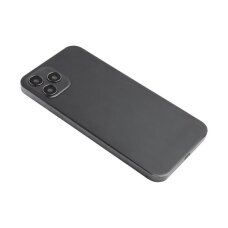
Smartphone back covers offer vital protection and personalization for your device, shielding rear glass and internal components while instantly refreshing its appearance. Their global market is rapidly expanding—projected to grow from USD 27.39 billion in 2025 to USD 35.50 billion by 2030 at a 5.33 % CAGR, and from USD 23.1 billion in 2023 to USD 50.3 billion by 2033 at an 8.1 % CAGR. Cover materials range from original OEM-grade glass and metal to cost-effective polycarbonate, TPU, and aftermarket glass. Consumers favor back-cover replacement over full housing swaps due to significant cost savings and easy DIY installation. Personalization trends—bold colors, patterns, and branded designs—combine with eco-friendly packaging to meet demand for style and sustainability. With compatibility across Apple, Samsung, Google Pixel, OnePlus, Xiaomi, Huawei, Motorola, and more, our portfolio of original and compatible back covers delivers both form and function for every handset.
1. Importance of Back Covers
1.1 Protection & Durability
Back covers shield vulnerable rear glass and internal components from scratches, drops, dust, and impacts, preserving device integrity and resale value.
OEM-grade glass covers provide an exact match to factory parts, while aftermarket polycarbonate and TPU options offer shock absorption and scratch resistance. Reinforced corners and precision fit ensure full defense against daily hazards without bulk.
1.2 Cost-Efficiency
Replacing only the back panel can cost 50–70 % less than swapping the entire housing or purchasing a new phone. Easy-to-follow DIY guides allow users to complete installation in minutes, reducing repair labor costs and downtime.
2. Materials & Construction
2.1 OEM-Grade Glass & Metal
Original equipment manufacturer (OEM) back covers are produced by the same companies that assemble the phone, ensuring perfect compatibility, factory-quality finish, and warranty compliance. OEM parts use the exact materials and coatings as in-box components, delivering familiar performance and durability.
2.2 Aftermarket Polycarbonate & TPU
Polycarbonate and thermoplastic polyurethane (TPU) back covers provide lightweight yet resilient protection, absorbing shocks via air-pocket corners and maintaining a slim profile.
Aftermarket glass panels are precision-cut but may differ slightly in thickness (0.3–0.5 mm) compared to OEM, requiring careful selection for seamless integration.
2.3 Environmental Considerations
Eco-conscious users favor biodegradable inks and FSC-certified cardboard packaging, reducing single-use plastic waste by over 90 % compared to blister packs.
Many aftermarket covers now incorporate recycled materials and recyclable components, aligning with growing sustainability trends.
3. Compatibility & Selection
3.1 Apple iPhone Series
Covers available for iPhone 12/13/14/15/16 Pro and Pro Max in original (new, pulled Grade A/B/C), service-pack, and compatible variants to suit every preference and budget.
3.2 Samsung Galaxy Series
Options for Galaxy S20–S24, Note-series, A-series, and foldables, including camera-lens-integrated panels, service-pack modules, and cost-effective aftermarket shells.
3.3 Google Pixel, OnePlus & Others
Back covers for Pixel 6/7/8, OnePlus 9–12, Xiaomi 12T/12/12 Pro, Huawei, Motorola, Sony Xperia, Nokia, and more ensure full device coverage across leading brands.
4. Styles & Personalization
4.1 Colors & Finishes
From classic titanium and glass-mirror finishes to matte, satin, and textured coatings, users can instantly alter their phone’s look to match mood or outfit. Metallic, pearlescent, and gradient options cater to premium tastes.
4.2 Custom Prints & Patterns
High-resolution UV printing locks vivid graphics—floral, geometrical, branded logos—beneath scratch-resistant clear coats, preserving design integrity through thousands of uses.
5. Installation & DIY Replacement
Most back-cover swaps require only basic tools (Phillips screwdriver, suction cup, adhesive strips). Step-by-step video tutorials guide users through safe removal of shattered panels and precise alignment of new covers, enabling same-day restoration at home.
6. Market Trends & Consumer Insights
The global protective-case market is projected to reach USD 41.42 billion by 2030 at an 8.3 % CAGR, with Asia-Pacific leading growth due to high smartphone penetration. Offline retail remains significant (68 % of sales), though e-commerce sales are rising. Consumers increasingly seek personalized, eco-friendly accessories, driving innovation in biodegradable materials and bespoke designs.
7. Why Choose Our Back Covers?
- Perfect Fit: Exact OEM dimensions or rigorously tested compatible molds ensure seamless installation.
- Quality Grades: Options from brand-new OEM service-pack modules to Grade A/B/C original-pulled and QC-tested compatible covers.
- Stylish Selection: Hundreds of colors, finishes, and prints to suit any style.
- Eco-Friendly: FSC-certified packaging, recyclable materials, and low-waste production.
- Fast Shipping: Most orders dispatch within 24 hours, with EU standard shipping free on orders over €50.
8. Conclusion
Whether restoring a cracked Galaxy rear panel or refreshing an iPhone’s look, our extensive range of premium back covers combines protection, personalization, and performance. With original and compatible solutions across all major brands you can keep your smartphone safe and stylish—day in, day out.
References
1. Mordor Intelligence. (n.d.). Mobile Phone Protective Cases Market Analysis. Retrieved from https://www.mordorintelligence.com/industry-reports/mobile-protective-cases-market
2. Market.US. (2024). Mobile Phone Protective Cases Market News. Retrieved from https://www.news.market.us/mobile-phone-protective-cases-market-news/
3. Lucintel. (2024). Mobile Phone Protective Case Market Forecast 2024–2030. Retrieved from https://www.lucintel.com/mobile-phone-protective-case-market.aspx
4. MarketResearch.com. (2024). Mobile Protective Cases. Retrieved from https://www.marketresearch.com/Global-Industry-Analysts-v1039/Mobile-Protective-Cases-40766492/
5. Grand View Research. (2023). Mobile Phone Protective Cover Market Size Report, 2030. Retrieved from https://www.grandviewresearch.com/industry-analysis/mobile-phone-protective-cover-market
6. Verified Market Research. (2024). Mobile Phone Protective Cases Market Size and Forecast. Retrieved from https://www.verifiedmarketresearch.com/product/mobile-phone-protective-cases-market/
7. The Business Research Company. (2024). Mobile Phone Protective Cover Global Market Report. Retrieved from https://www.thebusinessresearchcompany.com/report/mobile-phone-protective-cover-global-market-report
8. PR Newswire. (2024). Phone case market to grow by USD 13.9 billion (2024–2028). Retrieved from https://www.prnewswire.com/news-releases/phone-case-market-to-grow-by-usd-13-9-billion-2024-2028-driven-by-rising-smartphone-penetration-report-on-how-ai-is-driving-market-transformation---technavio-302358951.html
9. Wikipedia. (2024). Original equipment manufacturer. Retrieved from https://en.wikipedia.org/wiki/Original_equipment_manufacturer
10. ItsWorthMore.com. (2014). OEM or Non-OEM? Does it Really Matter? Retrieved from https://www.itsworthmore.com/blog/post/oem-or-non-oem-does-it-really-matter
