
The $2.5 Billion Electronic Ribbon Driving the Entire Smartphone Repair Industry
-
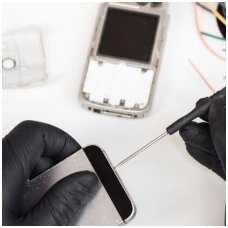
Summary
Our Smartphone Flex Cables collection delivers an unparalleled selection of original, service-pack, and compatible ribbon cables designed for every modern smartphone function—from display and digitizer connectors to charging and sensor flexes. Rigorously tested for signal integrity and mechanical resilience, these flex parts adhere to stringent industry standards (IPC-2223, IPC-9204) and support over 198 models across Apple, Samsung, Google Pixel, OnePlus, Huawei, Xiaomi, Nokia, and more. The global flat-flex cable market, valued at USD 2.5 billion in 2023, is forecast to grow at a 7.5 % CAGR to USD 4.8 billion by 2032, reflecting surging demand for compact, high-performance electronics cables. Simultaneously, the smartphone repair market reached USD 215.2 billion in 2023 and is projected to expand at 5 % CAGR through 2032, underscoring the critical role of reliable flex cables in device maintenance. Leveraging global warehouses and real-time inventory systems, our flex cable solutions enable rapid fulfillment, minimize device downtime, and empower both professional repair centers and DIY enthusiasts with comprehensive guides, alignment fixtures, and live technical support.
Introduction
Flex cables—also known as ribbon or FPC (Flexible Printed Circuit) cables—are the lifelines that connect critical smartphone components, including displays, cameras, charging ports, sensors, and antenna elements. Their delicate, multi-layered construction allows circuits to flex and fold within confined mobile chassis, but also makes them susceptible to tears, connector damage, and signal degradation over repeated use or during collisions. When a flex cable fails—whether due to fatigue cracking, connector issues, or manufacturing defects—users experience unresponsive touchscreens, malfunctioning cameras, erratic charging, and loss of radio connectivity. Replacing these flex assemblies with high-quality parts restores full device functionality and helps extend smartphone lifecycles.
Flex cables must meet exacting specifications in conductor thickness, substrate flexibility, and connector precision to ensure reliable electrical performance and mechanical durability. Industry-leading standards such as IPC-2223 and IPC-9204 define flex PCB testing protocols, including bend radius limits, cycle testing, and high-voltage exposure thresholds, to guarantee parts perform flawlessly in real-world conditions. Our flex cable offerings undergo comprehensive electrical and mechanical inspections, including continuity checks, impedance verification, and insertion-cycle testing (≥5,000 cycles), ensuring OEM-equivalent reliability.
Market Landscape and Growth Drivers
Flexible Cable Market Dynamics
The global flat-flex cable (FFC) market, encompassing both FFC and FPC technologies, was valued at USD 0.51 billion in 2024 and is projected to reach USD 0.68 billion by 2033 at a CAGR of 3.3 %. Another study reports the broader flat-flex cable market at USD 2.2 billion in 2024 with forecasts to USD 8.7 billion by 2032 at 16.3 % CAGR, reflecting diversification into automotive, medical, and industrial sectors alongside consumer electronics. The primary growth driver remains the consumer electronics segment, where increasing smartphone complexity and shrinking device form factors demand more sophisticated, space-efficient interconnect solutions.
Smartphone Repair Market Trends
Parallel to the flex cable market expansion, the global smartphone repair market hit USD 215.2 billion in 2023 and is expected to grow at 5 % CAGR through 2032 as device lifespans lengthen and “right-to-repair” regulations gain strength. A complementary report values the 2025 smartphone repair market at USD 195.11 million, projecting robust growth fueled by frailties in displays, batteries, and internal flex assemblies. This confluence of repair demand and flex cable market growth underlines the urgency for high-quality, comprehensive flex cable inventories to support rapid, high-volume repairs.
Furthermore, global smartphone shipments rose 3 % to 330 million units in Q4 2024, marking sustained hardware refresh cycles that amplify replacement-part volumes. Revenues also rebounded by 5 % in 2024, boosting average selling prices to a record USD 356 per unit, driving more premium repairs and components adoption.
Flex Cable Technologies and Specifications
FFC vs. FPC: Key Differences
- Flexible Flat Cables (FFC): Typically consist of laminated plastic films with uniformly spaced metallic conductors. They suit simple, short-range connections like camera or speaker flexes.
- Flexible Printed Circuits (FPC): Offer multilayer circuit patterns etched onto polyimide substrates, enabling complex routing, integrated resistors, and shielding within a single flex assembly.
Connector Types and Contact Methods
Smartphone flex cables terminate in a variety of connector styles—ZIF/LIF sockets, board-to-board connectors, or soldered tails—each demanding precise pin alignment and insertion force to ensure signal integrity. OEM-pulled assemblies preserve original connector interfaces, while service-pack cables match factory pinouts and mechanical tolerances for seamless compatibility.
Material and Manufacturing Standards
High-performance flex cables use copper conductor thicknesses from 0.5 oz to 2 oz and polyimide or polyester substrates rated for >500 % elongation. IPC guidelines such as IPC-9241 and IPC-2223 dictate testing criteria for bend, flex, and thermal cycles to validate long-term reliability under repeated opening and closing of folding devices or constant vibrations.
Model Coverage and Compatibility
Our catalog supports over 198 smartphone models across all major brands:
- Apple: iPhone 5 through iPhone 16 series—including display, touch digitizer, charging flex, and Face ID dot-matrix assemblies.
- Samsung: Galaxy S8–S24, Note 10–Note 20, Z Fold and Z Flip families—covering LCD, digitizer, charging-board flex, and wireless antenna cables.
- Google Pixel & OnePlus: Pixel 4–9, 6A, 7 Pro, Nord series, 6–10 Pro flex assemblies for displays, cameras, and USB-C connectors.
- Huawei & Xiaomi: P20–P60, Mi 8–Mi 11 series, Redmi/Note/Poco lineup flex cables for audio, charging, and sensor functions.
- Legacy & Emerging Brands: Nokia 7.1/7 Plus, Sony Xperia 10 III, Motorola G7/G8 series, Nothing Phone 1/2, and mobile gaming devices like Asus ROG Phone 3.
Quality Assurance and Testing Protocols
OEM & Service-Pack Parts
Service-pack flex cables are sourced directly from manufacturer repair kits, featuring factory-installed adhesives, EMI shielding, and calibrated pull-off forces. These parts carry full OEM traceability and performance guarantees.
Original (Used) Assemblies
Original-pulled flex cables harvested from donor phones undergo multistage validation: optical inspection for creases, electrical continuity tests, and functional bench tests to confirm zero dead lines and accurate signal transmission.
Compatible Aftermarket Components
Third-party flex cables are produced under ISO 9001 and IPC standards, with dimensional accuracy within ±0.05 mm and conductor impedance matched to OEM specifications. Rigorous sampling and batch testing ensure consistent quality comparable to original parts.
Sustainability and Circular Economy
By replacing discrete flex cables rather than discarding entire devices, our repair solutions help reduce electronic waste. Studies show that refurbishing extends device lifecycles by up to two years, cutting carbon emissions by over 40 % compared to full replacements. Aligning with initiatives like Europe’s “Phones Without Borders,” we support e-waste reduction and social reuse programs that refurbish devices for underserved communities.
Future Outlook and Innovation
Emerging trends in flex cable technology include biodegradable substrates to reduce end-of-life impact, modular snap-in connectors for tool-less repairs, and nanocoated shielding layers to enhance EMI protection. We continuously update our catalog to incorporate these innovations and support new device form factors and interconnect standards.
Conclusion
Our Smartphone Flex Cables category offers the most comprehensive, quality-assured selection of ribbon cables for every modern smartphone repair need. From factory-original service-pack assemblies to precision-engineered compatible replacements, our solutions empower professional repair centers and DIY enthusiasts to restore device functionality, minimize downtime, and champion sustainable repair practices.
References
- Business Research Insights. (n.d.). Smartphone Repair Market Expansion Strategies. Retrieved from https://www.datainsightsmarket.com/reports/smartphone-repair-1372300
- Canalys. (2024). Global smartphone market Q4 2024. Retrieved from https://canalys.com/newsroom/global-smartphone-market-q4-2024
- CaseMogul Phone Repairs. (2025). FPC (Flexible Printed Circuit) Connector Issues with Samsung Phones. Retrieved from https://casemogulphonerepairs.com/blogs/blog/samsung-phone-connector-issues
- Counterpoint Research. (2025). Global Smartphone Market 2024. Retrieved from https://www.counterpointresearch.com/insight/global-smartphone-market-2024
- Dataintelo. (2023). Flat-Flex Cable Market Report 2025–2033. Retrieved from https://dataintelo.com/report/global-flat-flex-cable-market
- DIY Fix Tool. (2024). Mastering Flex Cable Handling: Protecting and Connecting with Precision. Retrieved from https://www.diyfixtool.com/blogs/news/mastering-flex-cable-handling-protecting-and-connecting-with-precision
- International Data Corporation. (2024). Worldwide Smartphone Shipments Grew 6.4 % in 2024. Retrieved from https://my.idc.com/getdoc.jsp?containerId=prUS53072325
- MarketResearchIntellect. (2024). Flat-Flex Cable Market Size and Projections. Retrieved from https://www.marketresearchintellect.com/product/flat-flex-cable-market
- Molex. (n.d.). Flexible Printed Circuits (FPCs). Retrieved from https://www.molex.com/en-us/products/printed-electronics/flexible-printed-circuits
- NOK Corporation. (n.d.). Flexible Printed Circuits (FPCs). Retrieved from https://www.nok.co.jp/en/product/electronics/fpc.html
- ProtoExpress. (2024). IPC Flex PCB Testing Standards and Guidelines. Retrieved from https://www.protoexpress.com/blog/ipc-guidelines-and-testing-for-flex-pcbs/
- Research and Markets. (2024). Flat Flexible Cables Market Size & Forecast to 2030. Retrieved from https://www.researchandmarkets.com/report/flat-flexible-cables
- UniVdatos. (2023). Global Smartphone Repair Market Trends & Growth Analysis 2032. Retrieved from https://univdatos.com/reports/smartphone-repair-market
- UniVdatos. (2024). Smartphone Repair Market: Current Analysis and Forecast (2023–2030). Retrieved from https://univdatos.com/reports/smartphone-repair-market-2
- WiseGuy Research Consultants Pvt Ltd. (2025). Smartphone Repair Services Market CAGR to be at 13.25 % By 2032. Retrieved from https://www.einpresswire.com/article/779275669/smartphone-repair-services-market-cagr-to-be-at-13-25-by-2032-trends-and-growth-in-smartphone-repair-services
